Country-neutral wine evidence
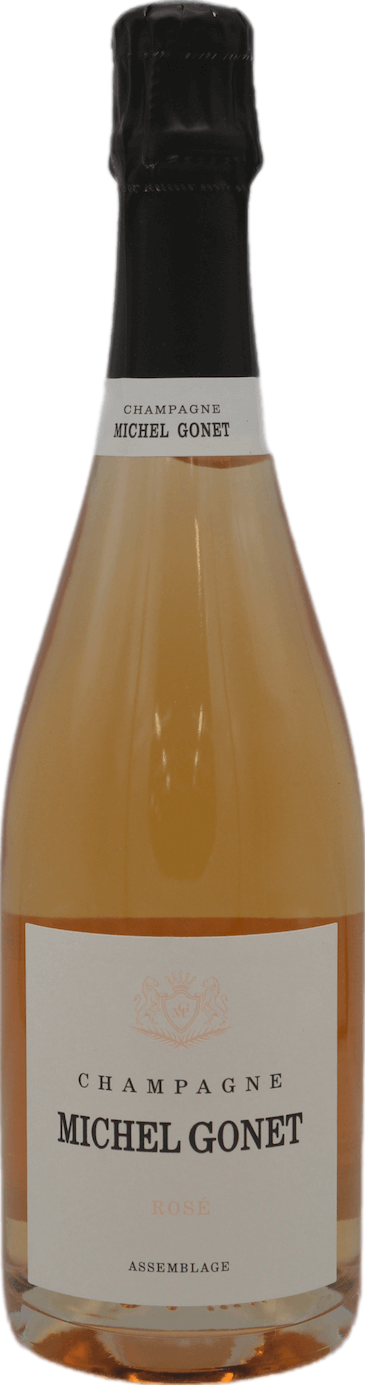
Champagne Michel Gonet Rosé (75cl)
Champagne Michel Gonet Rosé (75cl) is recorded as rose wine made from Pinot Noir and Chardonnay from Champagne, France. BottlePicker combines the recorded bottle identity with 1 official geographic-register match; retailer prices remain separated by country and currency.
| Producer | Michel Gonet |
|---|---|
| Wine style | rose |
| Grape | Pinot Noir, Chardonnay |
| Region | Champagne |
| Country | France |
| Bottle size | 750ml |
Local price availability
No current local-currency retailer price is attached to this wine. The evidence record remains useful for bottle identity, grape, origin and growing-place context; it will link to a country comparison when genuine local availability arrives.
How this wine record is connected
BottlePicker keeps identifier, origin, vineyard and availability evidence separate so one type of record is not mistaken for another.
- Bottle identity
- Structured catalogue identity
Name, producer, vintage, bottle size and origin fields are retained as the recorded catalogue identity. - Vineyard evidence
- No linked vineyard
No soil, parcel or climate claim is inferred for this bottle. - Origin context
- 1 official regional match
An exact region-name match supplies context. It does not prove this bottle carries a protected designation.
Bottle · grape · place
What is in this wine, and where it grows
The wine
Champagne Michel Gonet Rosé (75cl) is recorded as a rose wine made from Pinot Noir and Chardonnay in Champagne, France.
Typical grape profile: Pinot Noir — Red fruit (cherry, cranberry, red plum), earthy and floral notes, silky texture; Chardonnay — Ranges from crisp and citrussy (unoaked) to rich, buttery and vanilla-scented (oaked). The finished bottle can differ with vintage and winemaking.
The vineyard evidence
No verified vineyard or named parcel is linked yet. BottlePicker therefore does not assign a soil, elevation or site temperature to this bottle from its regional name alone.
Soil structure and vine density
No site-specific soil or planting-density record is available for this bottle.
Growing-temperature context
For general cultivar-level heat guidance, see the Pinot Noir and Chardonnay growing profiles. BottlePicker does not apply a generic range to this bottle without a verified vineyard link.
Official geographic-register context
What the official register confirms about Champagne
BottlePicker found an exact region-name match in an official wine or spirits register. This establishes useful regional context; it does not by itself prove that this particular bottle is entitled to the designation. Check the producer label and specification for that claim.
Legal reference: Article 107 of Regulation (EU) No 1308/2013
The catalogue region “Champagne” is an exact normalised name match to this official register entry.
Open the official register (opens in a new tab) →European Commission eAmbrosia · European Commission reuse notice · source updated 2026-06-11
Source-supplied bottle description
Retained as supporting identification copy; the structured facts and evidence links above are kept separate.
Drink it now. No need to decant it. In 1802, Charles Gonet created the Gonet Champagne house, a company that can now count seven generations of winemakers. In 1973, Michel Gonet modernized and expanded the cellars with the aim of further improving the quality and making wines that were able to be a reference in the region. The vineyard extends for 40 hectares around Avize (15 km south of Epernay) in the Côte des Blancs, the stronghold of the Grands Crus. The vines (80% Chardonnay and 20% Pinot Noir) favor the finesse and elegance of the wine over a terroir composed exclusively of chalk. The Côte des Blancs enjoys a quite exceptional climate: protected from the cold north winds by a providential hill, the south-facing slopes are spared from the rains that fall into the valley. These ideal climatic conditions associated with this exceptional terroir allow the Gonet vineyard to be classified as Grand Cru, the highest recognition of Champagne. This 100% Pinot Noir has a coppery color and a lively and powerful nose. On the palate, the fruity flavors are characterized by a juicy intensity, with notes of wild strawberries and raspberries. The flavors are long and persistent with final notes of butter and brioche deriving from the long aging in the bottle. The bubbles are fine and persistent. Try it with salmon, tuna, or even grilled pork.
Evidence boundary
This page combines the recorded bottle identity with linked source records. An exact region-name match supplies regional context but does not prove that this bottle carries the protected designation. A vineyard is only shown as bottle-level evidence when a wine-to-vineyard link exists. BottlePicker does not infer a vineyard, soil or site climate from a retailer title.