Country-neutral wine evidence
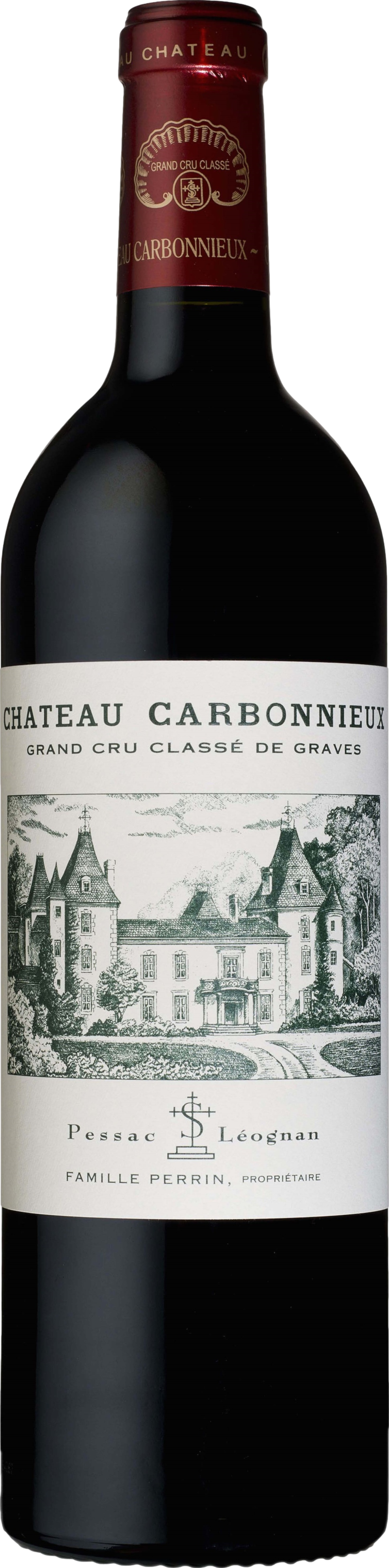
Chateau Carbonnieux 2019 Wine (75cl)
Chateau Carbonnieux 2019 Wine (75cl) is recorded as 2019 other wine made from Cabernet Sauvignon and Merlot from Bordeaux, France. BottlePicker combines the recorded bottle identity with 1 official geographic-register match; retailer prices remain separated by country and currency.
| Producer | Chateau Carbonnieux |
|---|---|
| Vintage | 2019 |
| Wine style | other |
| Grape | Cabernet Sauvignon, Merlot |
| Region | Bordeaux |
| Country | France |
| Bottle size | 750ml |
Local price availability
No current local-currency retailer price is attached to this wine. The evidence record remains useful for bottle identity, grape, origin and growing-place context; it will link to a country comparison when genuine local availability arrives.
How this wine record is connected
BottlePicker keeps identifier, origin, vineyard and availability evidence separate so one type of record is not mistaken for another.
- Bottle identity
- Structured catalogue identity
Name, producer, vintage, bottle size and origin fields are retained as the recorded catalogue identity. - Vineyard evidence
- No linked vineyard
No soil, parcel or climate claim is inferred for this bottle. - Origin context
- 1 official regional match
An exact region-name match supplies context. It does not prove this bottle carries a protected designation.
Bottle · grape · place
What is in this wine, and where it grows
The wine
Chateau Carbonnieux 2019 Wine (75cl) is recorded as a 2019 other wine made from Cabernet Sauvignon and Merlot in Bordeaux, France.
Typical grape profile: Cabernet Sauvignon — Blackcurrant, cedar, graphite; ages well, especially in Bordeaux blends; Merlot — Plum, black cherry, chocolate; softer and rounder than Cabernet Sauvignon. The finished bottle can differ with vintage and winemaking.
The vineyard evidence
No verified vineyard or named parcel is linked yet. BottlePicker therefore does not assign a soil, elevation or site temperature to this bottle from its regional name alone.
Soil structure and vine density
No site-specific soil or planting-density record is available for this bottle.
Growing-temperature context
For general cultivar-level heat guidance, see the Cabernet Sauvignon and Merlot growing profiles. BottlePicker does not apply a generic range to this bottle without a verified vineyard link.
Official geographic-register context
What the official register confirms about Bordeaux
BottlePicker found an exact region-name match in an official wine or spirits register. This establishes useful regional context; it does not by itself prove that this particular bottle is entitled to the designation. Check the producer label and specification for that claim.
Legal reference: Article 107 of Regulation (EU) No 1308/2013
The catalogue region “Bordeaux” is an exact normalised name match to this official register entry.
Open the official register (opens in a new tab) →European Commission eAmbrosia · European Commission reuse notice · source updated 2026-04-13
Official US label evidence
Historical Texas label approval
4 official label approvals have the same normalised product name as this BottlePicker record. These approvals pre-date September 2021 and help check identity, stated ABV and the responsible trade name; they do not prove that the current bottle has the same formula, remains registered or is available in Texas.
| Approved label | Type | Approved | ABV | Trade name | TTB record |
|---|---|---|---|---|---|
| CHATEAU CARBONNIEUX (official certificate PDF opens in a new tab) | Wine | 2016-07-11 | 13% | LAPHAM IMPORT COMPANY | 14300001000074 (TTB record opens in a new tab) |
| CHATEAU CARBONNIEUX (official certificate PDF opens in a new tab) | Wine | 2016-07-11 | 13.5% | LAPHAM IMPORT COMPANY | 14300001000082 (TTB record opens in a new tab) |
| CHATEAU CARBONNIEUX (official certificate PDF opens in a new tab) | Wine | 2015-03-18 | 14% | BORIE MANOUX | 11306000000048 (TTB record opens in a new tab) |
| CHATEAU CARBONNIEUX (official certificate PDF opens in a new tab) | Wine | 2015-03-18 | 13% | BORIE MANOUX | 11083000000008 (TTB record opens in a new tab) |
Matched by exact normalised product name; no label artwork is copied. Source: Texas Alcoholic Beverage Commission approved labels (opens in a new tab) via the Texas Open Data Portal. The portal does not specify a reuse licence for third-party label artwork, so BottlePicker links to the official PDF and publishes attributed factual extraction only. No state endorsement is implied.
Source-supplied bottle description
Retained as supporting identification copy; the structured facts and evidence links above are kept separate.
Cellar for up to 15 years. Decant 1 hour before serving. Dating back to the 12th century, the historic Château Carbonnieux is one of Bordeaux’s oldest estates and was one of the very first to be included in the Graves wine classification system. Today it's also one of the largest estates in Pessac-Léognan with 92 hectares of vineyards which are almost evenly split between black and white grape varieties. Their Grand Vin is made from the estate’s finest plots each vintage and is typically composed of two-thirds Cabernet Sauvignon to one-third Merlot. It is vinified in stainless steel tanks and then aged in 33% new French oak barrels for 18 months to soften Pessac-Leognan’s characteristically firm tannins and well-built structure. This wine benefits from decanting ahead of serving to reveal the full beauty and complexity of the cuvee. On the nose there are bold dark fruit aromas along with undertones of spice, tobacco leaf, and dried herbs which carry through onto the palate. The first sip reveals a generous full body supported by grippy tannins and a muscular structure with a long finish. This is a wine with a long future ahead of it which will respond well to another decade or so in the cellar. If you’d prefer to enjoy it now, try pairing with rich dishes like a prime ribeye steak or hearty meat stews.
Evidence boundary
This page combines the recorded bottle identity with linked source records. An exact region-name match supplies regional context but does not prove that this bottle carries the protected designation. A vineyard is only shown as bottle-level evidence when a wine-to-vineyard link exists. BottlePicker does not infer a vineyard, soil or site climate from a retailer title.