Country-neutral wine evidence
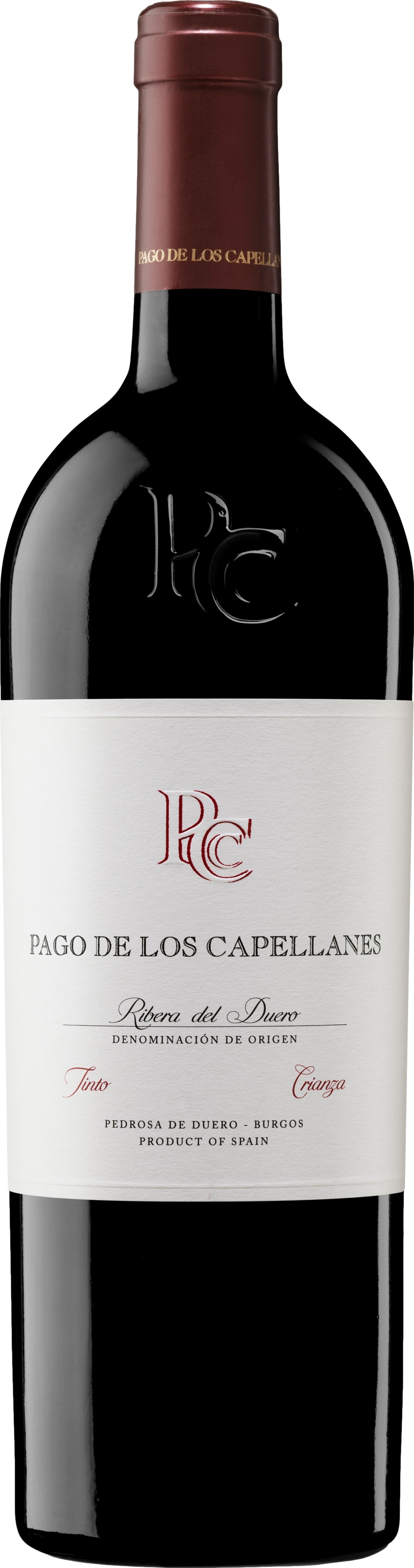
Pago de los Capellanes Crianza 2023 Wine (75cl)
Pago de los Capellanes Crianza 2023 Wine (75cl) is recorded as 2023 other wine made from Cabernet Sauvignon, Tempranillo, and Merlot from Ribera del Duero, Spain. BottlePicker combines the recorded bottle identity with 1 official geographic-register match; retailer prices remain separated by country and currency.
| Producer | Pago de los Capellanes |
|---|---|
| Vintage | 2023 |
| Wine style | other |
| Grape | Cabernet Sauvignon, Tempranillo, Merlot |
| Region | Ribera del Duero |
| Country | Spain |
| Bottle size | 750ml |
Local price availability
No current local-currency retailer price is attached to this wine. The evidence record remains useful for bottle identity, grape, origin and growing-place context; it will link to a country comparison when genuine local availability arrives.
How this wine record is connected
BottlePicker keeps identifier, origin, vineyard and availability evidence separate so one type of record is not mistaken for another.
- Bottle identity
- Structured catalogue identity
Name, producer, vintage, bottle size and origin fields are retained as the recorded catalogue identity. - Vineyard evidence
- No linked vineyard
No soil, parcel or climate claim is inferred for this bottle. - Origin context
- 1 official regional match
An exact region-name match supplies context. It does not prove this bottle carries a protected designation.
Bottle · grape · place
What is in this wine, and where it grows
The wine
Pago de los Capellanes Crianza 2023 Wine (75cl) is recorded as a 2023 other wine made from Cabernet Sauvignon, Tempranillo, and Merlot in Ribera del Duero, Spain.
Typical grape profile: Cabernet Sauvignon — Blackcurrant, cedar, graphite; ages well, especially in Bordeaux blends; Tempranillo — Cherry and plum with leather and vanilla from oak ageing, classic in Rioja. The finished bottle can differ with vintage and winemaking.
The vineyard evidence
No verified vineyard or named parcel is linked yet. BottlePicker therefore does not assign a soil, elevation or site temperature to this bottle from its regional name alone.
Soil structure and vine density
No site-specific soil or planting-density record is available for this bottle.
Growing-temperature context
For general cultivar-level heat guidance, see the Cabernet Sauvignon, Tempranillo, and Merlot growing profiles. BottlePicker does not apply a generic range to this bottle without a verified vineyard link.
Official geographic-register context
What the official register confirms about Ribera del Duero
BottlePicker found an exact region-name match in an official wine or spirits register. This establishes useful regional context; it does not by itself prove that this particular bottle is entitled to the designation. Check the producer label and specification for that claim.
Legal reference: Article 107 of Regulation (EU) No 1308/2013
The catalogue region “Ribera del Duero” is an exact normalised name match to this official register entry.
Open the official register (opens in a new tab) →European Commission eAmbrosia · European Commission reuse notice · source updated 2023-07-31
Source-supplied bottle description
Retained as supporting identification copy; the structured facts and evidence links above are kept separate.
Drink It now or cellar for up to 10 years. It is recommended to decant it for half an hour. Located in the heart of Ribera del Duero, Pago de los Capellanes was founded by Paco Rodero and his wife Conchi Villa. In the 70 hectares of vineyards that surround the cellar, they grow the local native Tempranillo or Tinto Fino grape, and small quantities of Cabernet Sauvignon and Merlot. Here the land has low productivity and the resulting wines are highly concentrated. The company's wines are refined in an underground cellar that is 10 meters deep. The Tempranillo grapes are selected from vineyards with an average age of 35 years, planted on clay-limestone, stony soils, poor in organic substance and with very low fertility, and located in the municipalities of Pedrosa de Duero, Anguix, and Roa. After vinification, the wine rests for 12 months in 300-liter French oak barrels, before bottling. Pago de los Capellanes Crianza is a young and balanced red wine. Its aromatic profile reveals notes of red fruits such as cherry and raspberry and some slightly spicy hints. On the palate, it is lively and has good freshness, it is fruity and clean. The finish is pleasant and persistent. It goes very well with aubergine parmigiana and grilled pork filet.
Evidence boundary
This page combines the recorded bottle identity with linked source records. An exact region-name match supplies regional context but does not prove that this bottle carries the protected designation. A vineyard is only shown as bottle-level evidence when a wine-to-vineyard link exists. BottlePicker does not infer a vineyard, soil or site climate from a retailer title.